All You Zombies
Because camp doesn’t take itself seriously, it can be used to tackle difficult, even scary, concerns
By Athena Aktipis
Frank Frazetta cover from Beware #10, July 1954. Wikimedia Commons, Public Domain.
I’m sitting in the audience at the Nightmare in the Ozarks Film Festival watching a panel I helped organize, and I have the feeling that something I’ve been building for years is actually working.
On stage, comedian Shane Mauss and evolutionary psychologist David Pinsof are in conversation with Justin Best, the writer-director of the supremely campy horror film Sheryl, and Anthea Neri Best, the movie’s lead actress. The topic is dark comedy: what it is, why it works, and why it matters. Pinsof is explaining how humor helps us recognize and correct coordination failures, how laughing together at something scary is not a form of avoidance but of shared reckoning. The audience is half horror fans and half open-minded interdisciplinary academics, and they are completely with him.
This is horror meets cooperation science (the study of cooperation in nature) meets epistemology, and nobody seems to find that strange. That's the point.
Camp as Epistemic Technology
Academia has a problem dealing with scary futures, such as institutional failure, existential risk, influence and manipulation, and, more broadly, the genuine possibility that things could go very, very wrong. Talking about these topics carries reputational risk. Engaging with them can mark you as alarmist or fringe, or simply not serious. The result is a kind of collective epistemic avoidance: We know we should think carefully about catastrophic risks and uncomfortable possible futures, and yet the social environment of higher education makes it genuinely hard to do so openly.
Camp is one solution to this problem. By camp I mean the deliberate embrace of irony, humor, and self-aware playfulness, with more than a touch of subversiveness running through it. Camp doesn't take itself seriously, which is precisely what allows it to help us take scary and difficult things seriously. It creates a framework in which engaging with frightening or heterodox ideas is leavened with play. And that shift in frame is not merely psychological. It has real consequences for how we think about the world and how we work together. In other words, it is an intellectual tool with power to shape shared epistemologies and our capacities to coordinate effectively with each other.
The power of camp as an intellectual tool rests on three things. The first is shared attention on a counterfactual reality. When a room full of people imagine the zombie apocalypse together, they are building a shared mental model of a possible world. This is much harder to do with abstract risks like nuclear war, infrastructure collapse, or AI misalignment. The zombie apocalypse is a stand-in for all-hazards preparedness, and it works better than imagining real disasters because it is specific enough to allow for everyone’s shared attention, while playful enough to engage in without triggering the fears and defensiveness that make grappling with real risks often difficult for us to do, both individually and collectively.
The second is common knowledge. Common knowledge is when we all know something and we all know that we all know something. This plays out in zombie apocalypse camp. When we imagine a zombie apocalypse counterfactual reality together—especially in a participatory, embodied way—we generate something uniquely valuable: Everyone knows that everyone else is also playfully imagining a zombie apocalypse. This common knowledge is the foundation of coordination, in this case coordination around thinking through and preparing for a variety of risks and hazards we might face in the future. Coordination requires that knowledge is shared and visible. Camp creates that visibility through participation.
When a room full of people imagine the zombie apocalypse together, they are building a shared mental model of a possible world.
The third is honest signaling. Engaging seriously with the zombie metaphor in your research is not a costless act. It requires a willingness to be seen as a little weird, to risk the raised eyebrow from colleagues who may think you're not being serious enough. That cost is, from a signaling perspective, part of what makes participation meaningful. People who show up to the various zombie-related events my colleagues and I organize have already demonstrated that they can hold rigor and irreverence simultaneously, that they are not so invested in their professional persona that they can't play. This self-selection means that the people in the room are the people you want in the room.
A Camp Proof of Concept
Zombified Media is an education nonprofit that has been operating in this deliberately camp space since 2018, hosting a number of different programs. For instance, the Zombified podcast (which I co-host with Dave Lundberg-Kenrick) uses the idea of zombification—the hijacking of behavior by parasites, pathogens, and social influence—as an entry point for thinking seriously about how biology, technology, and ideas shape us individually and collectively. This camp approach allows us to have fun with these challenging issues and also to be playful with intellectually serious topics that might otherwise be a little dry.
The Zombie Apocalypse Medicine Meeting takes the same approach, weaving in disaster preparedness and existential risk with zombification topics. The meeting brings together researchers, policymakers, artists, humanities scholars, and doctors to ‘share brains,’ through a combination of traditional talks, workshops, livestreams, art installations, and public events. We collaborate with the Nightmare in The Ozarks Film Festival to produce crossover programming, like the Dark Comedy panel I described earlier.
But it’s not just horror crossover events that have come out of Zombified Media. The kind of free inquiry and intellectual exploration that our approach affords has led to ‘serious’ science as well. Two years ago we received a $1.5 million National Science Foundation grant to study collective risk management, looking at the rules of life that allow organisms across the tree of life to do so effectively. This grant explicitly includes game development and funding for public engagement.
People who show up to the various zombie-related events my colleagues and I organize have already demonstrated that they can hold rigor and irreverence simultaneously, that they are not so invested in their professional persona that they can't play.
The most recent Zombie Apocalypse Medicine Meeting generated a research collaboration spanning multiple labs, focused on AI and cooperation. This is real science, with real stakes, that emerged from a room full of people thinking seriously about zombies. We are now launching the Cooperative Futures Institute at Arizona State University, a serious endeavor that grew out of our engagement with the real world, yet facilitated by playful shared attention on a counterfactual reality where we are all navigating the zombie apocalypse.
We have seen in academia the erosion of intellectual space for dissent, unconventional thinking, and genuine engagement with uncomfortable ideas. We can think of camp as a viewpoint diversity technology. It suspends the normal social penalties for heterodox thinking by relocating the conversation to a space where the rules are explicitly different. You can't be accused of being alarmist about the zombie apocalypse. You can’t be accused of not taking AI risk seriously enough when you're at a show called Surviving AI (more on that in a minute).
It is not about making serious topics frivolous, but rather about recognizing that trying to be too serious—the grave tone, the careful hedging, the avoidance of anything that might seem too weird—is itself an epistemic constraint, and one that can be broken by embracing camp.
All the Camps
Which brings me to Surviving AI—a variety show with music and comedy and an ironic ‘80s retro-futurist aesthetic focused on how we build a positive future with AI. For example, at our inaugural show we had a battle between AI-generated bluegrass music and live bluegrass musicians. (The AI bluegrass was technically impressive, but as soon as the live musicians started playing, the room filled with collective energy and people spontaneously started dancing.)
Surviving AI’s camp tone is deliberate. We think the future with AI is genuinely open, genuinely scary, and genuinely worth imagining together—with rigor, with humor, and with the honest acknowledgment that none of us knows exactly how this will unfold.
Here’s where I want to play with the word “camp” for a moment. In contemporary discourse about AI, there are the camps—the doomers, the accelerationists, the cautious optimists, the techno-utopians. These camps often talk past each other, locked into positions that feel more like identities than arguments.
What Surviving AI tries to create is an epistemic space that can hold all the camps. Not by flattening the differences, but by creating a shared playful context in which those differences can actually be productive. A room where doomers and accelerationists can watch an AI bluegrass battle together and feel, for a moment, that they are working on the same problem.
That is what camp does. It creates the shared attention, the common knowledge, the honest signaling of investment in a shared future. It is a tool for collective risk management and positive future-building. And the key word is collective. We cannot manage the risks of transformative technologies alone, through individual analysis or institutional positioning. We need to imagine them together, which means we need frames that make that imagining possible.
The futures we want won't build themselves—but they might just emerge from a room full of people willing to imagine them together, zombies and all.
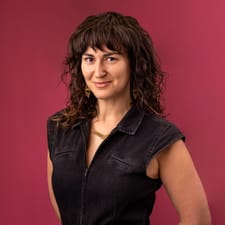
About the author
Athena Aktipis, Ph.D., is the founder and executive director of the Cooperative Futures Institute at Arizona State University, the founder and president of Zombified Media, and the author of several books including A Field Guide to the Apocalypse: A Mostly Serious Guide to Surviving Our Wild Times.