The Limits of Trust
The academic community has itself to blame for some of the loss of public trust
By Jason Steffen
"The Monk by the Sea" by Caspar David Friedrich, 1808. Wikimedia Commons, Public Domain.
Admiral Andrew Cunningham once said of the British Royal Navy, “It takes the Navy three years to build a ship. It will take 300 years to build a new tradition.” Gaining trust is harder than breaking it, and public trust, in particular, should not be trifled with. Over the last decade, trust in science, and academia more generally, has eroded substantially, partly if not largely due to internal problems.
Take, for example, recent revelations about Oliver Sacks, the famous neurologist who, over his career, wrote many bestselling books for both expert and general audiences alike. Hospitals and medical schools used Sacks’ highly cited works for treating patients with various mental health issues. Unfortunately, many of the cases he outlined in his books included material fabrications—putting words in people’s mouths, giving them skills they didn’t have, and assigning them feelings and intentions they didn’t share. I say “unfortunately” here as a euphemism for “in gross violation of scientific and personal ethics.”
Sacks justified his actions as being “for a higher purpose,” rather than for shallow reasons like fame or attention. No, his exaggerations came from an impulse that was, in his words, “purer” and “deeper.” While Sacks clearly struggled with internal demons throughout his life, he should have, from the beginning, been held to account for his practices.
Today, as a growing body of cases indicates, there are many examples of academics overselling their findings, misstating or hiding facts, exaggerating consequences, using their professional positions to push partisanship, and falsely attributing beliefs and motives to their allies and their enemies—all for the “greater good.”
American academics may not suffer many serious consequences from our periodic foolish vainglory—at least not yet. But we can certainly erode the public trust by advocating for, or providing cover for, such practices to the point that our institutional, financial, and political support collapses. The current loss of trust didn’t come from nowhere, and much responsibility to rebuild it lies with us.
About the author
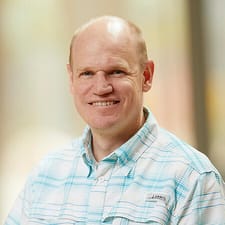
Jason Steffen, Ph.D., is an assistant professor of astronomy and physics at the University of Nevada, Las Vegas, and a member of the science team for NASA’s Kepler mission.