The Paradoxical Limits of Heterodoxy
Heterodoxy believes in its own orthodoxy
By Tony Banout
Illustration by Andrei Nicolescu (used with permission).
What does it mean for heterodoxy to have limits? The process of defining anything ultimately involves delineating, an exercise in setting something apart from what it is not. That is, to define is to limit.
Ontologically, heterodoxy’s limits are clear. All that it consists of are claims that contradict or challenge assertions held to be true. Without orthodoxy, there is no heterodoxy. And as orthodoxy simply means correct belief, heterodoxy is that which either is or is deemed to be incorrect.
To state the obvious, who would want to believe falsehoods, assenting incorrectly against that which is true? This may seem so basic as to be superfluous. The pursuit of heterodoxy for its own sake is ridiculous, even contradictory. The founders of this movement we now know as Heterodox Academy would agree. What is Jonathan Haidt’s well-known exhortation to restore truth as the proper telos of the university other than a plea to pursue orthodoxy?
The holder of the heterodox view believes it to be true and believes that the orthodoxy it challenges, despite having the advantage of wide acceptance, is false. Anyone genuinely involved in the work of open inquiry—providing reasons for supporting truth claims, evidence for conclusions, constructive engagement in a community of discursive exchange—is seeking orthodoxy. We humans are interested in believing correctly.
Ontological definitions are useful, but only go so far. In the actual life of our institutions, in practice, when we speak of orthodoxy we often do not mean truth. What we mean is the dominant view taken to be true within a given community or by the holders of institutional authority. And more importantly, all too often that dominant view, whether circulated culturally or institutionally enforced, is immunized from inquiry.
Heterodoxy is a challenge to that view, out of the belief that what is deemed to be orthodox is mistaken. The orthodox, heterodoxy asserts, is at the very least not entirely accurate and sometimes entirely wrong. Heterodoxy always contains an element of dissent. Heterodoxy, paradoxically, believes in its own truth. In this sense, it is orthodox.
What does it then mean in practice for heterodoxy to have limits? Another way of posing this question is to ask about the purpose and role of dissent. How heterodoxy is treated in a community of truth seekers reveals practical limitations in a particular context. For a community of truth seekers, of imperfect learners as we often put it, heterodoxy—understood as a good-faith challenge to dominant truth claims—deserves engagement. Why? Because no truth claim should be immunized from good-faith inquiry.
Anyone genuinely involved in the work of open inquiry—providing reasons for supporting truth claims, evidence for conclusions, constructive engagement in a community of discursive exchange—is seeking orthodoxy. We humans are interested in believing correctly.
Rather than raise the cost of dissent and skepticism, institutional culture and policy should create conditions in which they are optimized, flowing freely. Heterodoxy will always be an essential element in the ceaseless process of inquiry and should interrogate as it wishes. The functional limits of heterodoxy should solely and simply be the strength of its claims and the soundness of its methods.
Such a commitment to open inquiry is rooted in the scientific method and enlightenment thought. Can we submit the soundness of empiricism and rational argument to interrogation? Surely. They can stand on their own. The very existence of our modern universities and their practices of knowledge-seeking rely on their soundness. If there is any proper orthodoxy, it is one that affirms the discursive process of exchanging truth claims in pursuit of knowledge. This works precisely because any challenge to the scientific method and reasoned argument relies on those very methods for substantiation and defense. Lose that and you lose the university system and, with it, the quintessence of the constitution of knowledge.
If there is a foundational orthodoxy, it is merely the orthodoxy of reason. And the orthodoxy of reason, so long as it remains methodologically sound, affirms the ongoing examination of its own claims. In precisely this way, it welcomes heterodoxy. The verb used in the University of Chicago’s Kalven Report is apt here: For a university ultimately devoted to “the discovery, improvement, and dissemination of knowledge,” there is an obligation to cherish a diversity of viewpoints.
Bring it. Or, as Thomas Jefferson put it when arguing for the Virginia Statute for Establishing Religious Freedom prior to the Constitutional Convention, “Truth is great, and will prevail if left to herself; that she is the proper and sufficient antagonist to error.”
We might also reverse the question: What if any are the limits of orthodoxy? Simply, it should assert and defend its claims—even its foundational claim of the orthodoxy of reason—in an atmosphere of inquiry, never concretizing into ideology. In other words, established truth should be open to questioning because what we have believed to be true has often turned out to be false. Universities are no place for dogmatic imposition. Inquiry is the sphere in which orthodoxy and heterodoxy operate in productive exchange.
Ideology is the sphere in which orthodoxy refuses to be questioned. This is illiberalism, leading to indoctrination where there should be curiosity and searching. Politically, it threatens to slide into authoritarianism. John Dewey, in his 1902 essay “Academic Freedom,” distinguishes academic inquiry from the teaching methods of ecclesiastical and political institutions that hew to their particular tenets. While the latter seek to create disciples, the university seeks to teach students how to think. We are inquisitive, not ideological.
As the language of orthodoxy and heterodoxy have strong religious undertones, the terms are prone to misunderstanding. Perhaps, as Michael Regnier has suggested, the name “Heterodox Academy” is best understood as something of a religious metaphor. With that view in mind, I take the point of Heterodox Academy all along was that our universities should never harden into the kind of religious dogmatism that would banish and excommunicate threatening ideas.
Universities should not function as the sectarian institutions Dewey contrasts them with, creating unthinking disciples. But the sad reality is that there is plenty of evidence to show that the academy indeed has hardened into dogmatism. Ultimately, what matters most is not that there is a set of established truths within any discipline or for the university system overall, but the posture that those who assent to those truths take toward challenge.
If there is any proper orthodoxy, it is one that affirms the discursive process of exchanging truth claims in pursuit of knowledge.
Religious undertones resonate with me personally. My first taste of heterodoxy was set within the high church liturgy of Holy Week in the Coptic Orthodox Church. A bored boy of 13 amidst billowing frankincense and ancient incantations, I sat at the rear pew reading through Gospel accounts of Christ’s Passion. I had a lot of time on my hands. Coptic services are a feat of endurance, elite spiritual athleticism. It struck me that the accounts of Matthew, Mark, Luke, and John had variations within them. They sometimes placed the order of events differently, included aspects absent in the others, or related irreconcilably different details. I couldn’t escape the conclusion that the Bible was not concerned with perfect historical accuracy. What then did the orthodox idea of scriptural infallibility mean?
When I pressed questions of scriptural truth with my parents, it didn’t go very well. And so I became heterodox within a professedly orthodox environment. My elders most reliably gave me what I came to think of as the standard response to my questions: Go talk to the proper authority—in this case, learned clerics—and then defer to them. That would purportedly set me straight. Unquestioning credence to authority based on the mere fact that it holds power did not convince me then, nor does it now.
Arguing for the inclusion and constructive engagement of heterodox ideas is another way of arguing for viewpoint diversity. Neither are ends in and of themselves but fundamental elements in the pursuit of truth, however contingent and iterative that truth may be. John Tomasi and Jonathan Haidt’s recent Inside Higher Ed essay on the importance of viewpoint diversity can virtually be re-read, without losing any of its explanatory power, substituting heterodoxy for viewpoint diversity.
Heterodox Academy is a young movement. When HxA began in 2015, it was inherently dissident, pushing back against an intellectual monoculture. Naturally the emphasis was on heterodoxy. This parallels how dissidents assert free expression when it aligns with their agenda, yet sometimes fail to uphold it as a broader principle. Superficially, dissidence is itself a free expressive act. But, to believe in freely expressed dissent on principle is to affirm and believe in the free expression of those views and claims one considers false, even loathsome. If you don’t believe in free speech for the views you detest, you don’t believe in free speech, said Noam Chomsky.
What then happens when the heterodox becomes established as accepted truth? That is, when the heterodox becomes orthodox, when the revolutionaries take power and the punk becomes The Man. Wasn’t this always the point? Therein lies the test for HxA and our university system. Clarity that we all are seeking the orthodox, we all are seeking truth, is essential for how we address that challenge.
The limits of heterodoxy are its inherent paradox. Heterodoxy believes its truth. It believes in its own orthodoxy.
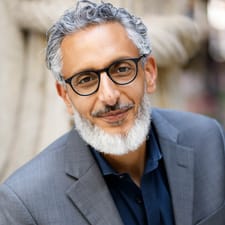
About the author
Tony Banout, Ph.D., is a national expert in one of the most pressing issues of our time: building a thriving democracy out of deep difference on fundamental religious and philosophical grounds. He is serving as the Inaugural Executive Director, Forum for Free Inquiry at the University of Chicago. He is a member of the board of directors at Heterodox Academy.